
Soundproof Windows in El Paso: How to Quiet Your Home
Soundproof Windows in El Paso: How to Quiet Your Home
Living in El Paso means living with noise. Between the roar of I-10, the freight trains cutting through the valley, aircraft overhead, and training activity from Fort Bliss, plenty of homes never get the quiet they deserve. Windows are the weakest link in every wall — sound pours through glass far more easily than through brick or stucco. The good news is that the right windows, installed properly, can cut that noise dramatically. Here is how soundproof windows work, what is worth paying for, and how to know when your current windows are the problem.
Why El Paso Homes Are So Noisy
El Paso is a border city built around big infrastructure. The interstate runs through neighbourhoods for miles, Union Pacific and BNSF freight lines serve the border crossing, and military training carries sound across the desert floor for miles — desert air transmits noise surprisingly well at night. Add leaf blowers, backyard dogs, and weekend gatherings from every direction, and quiet becomes a genuine luxury.
Most of that noise enters through windows. A standard wall assembly blocks far more sound than the glass in it, so even a small window is acoustically the “hole” in the room. Older single-pane windows — still common in mid-century El Paso homes — do almost nothing to slow sound down. If you can hold a conversation over the traffic from your living room with the windows closed, your glass is the weak point.
What Actually Makes a Window Soundproof
No window is truly silent, but well-built units get close. Three things matter most.
Glass thickness and lamination. Soundproofing starts with laminated glass — two panes of glass bonded around a thin plastic interlayer that absorbs vibration the way a car windshield does. That interlayer is what stops a bass-heavy truck rumble that ordinary double glazing barely dents. Mixing pane thicknesses (one thick, one thinner) blocks different frequencies at once: the thick pane handles low rumble, the thinner one handles higher-pitched sound like voices and brakes.
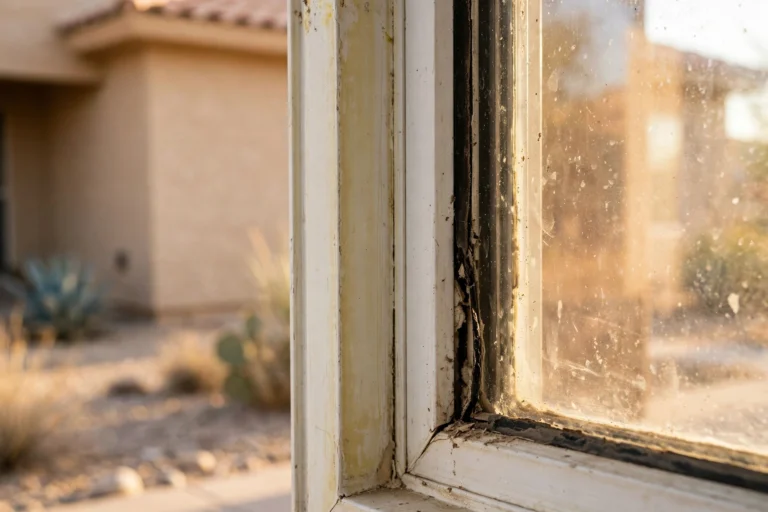
An airtight seal. Sound travels on air. A window with failed weatherstripping or cracked caulk leaks noise exactly the way it leaks air — which is why the same fixes that stop draughts also take the edge off noise. Any soundproof window is only as good as its seals, and a professional install that seals the frame to the wall is doing half the acoustic work before the glass even matters.
Multiple panes with wide gaps. Double and triple glazing trap air between panes, and that trapped air slows sound. Wider air gaps perform better acoustically than narrow ones, though there is a point of diminishing returns — beyond a certain width, the air itself starts transmitting sound again. This is where quality design beats raw thickness.
STC Ratings, Explained Simply
Windows are rated for sound with STC — Sound Transmission Class. Think of it as a score: a typical single-pane window sits around STC 26, which lets most street noise straight through. Standard double-pane windows land around STC 28 to 32. Purpose-built soundproof windows with laminated glass reach STC 40 to 50, and at that level a busy road outside drops to a faint hum inside.
The scale is logarithmic, which matters: every 10-point jump roughly halves the perceived noise. So moving from STC 27 to STC 42 is not a small upgrade — it is a transformation. When comparing products, ask for the STC rating of the complete window unit, not just the glass, since frame and seals are part of the real-world result.
Quicker Fixes vs Full Replacement
Before you commit to new windows, it helps to know what each option actually buys you.
Sealing gaps. Re-caulking the exterior and refreshing weatherstripping is the cheapest meaningful step, and on a windy night you will notice the difference immediately. It will not turn a single-pane window into a quiet one, but it removes the worst of the leak-through.
Heavy curtains and acoustic inserts. Thick, floor-to-ceiling curtains absorb some echo inside the room and soften high frequencies, but they do not block much sound coming through the glass. Aftermarket acrylic inserts that press into the window frame add a genuine second air gap and can take a real bite out of noise — a decent middle ground for renters or for a single problem room.
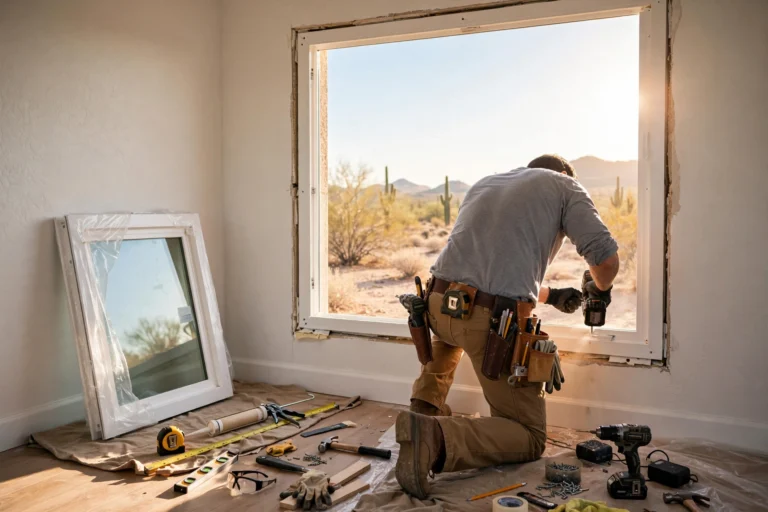
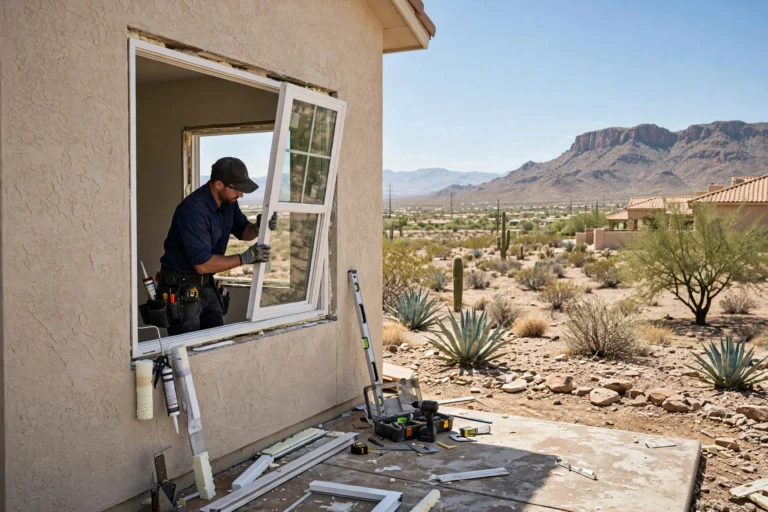
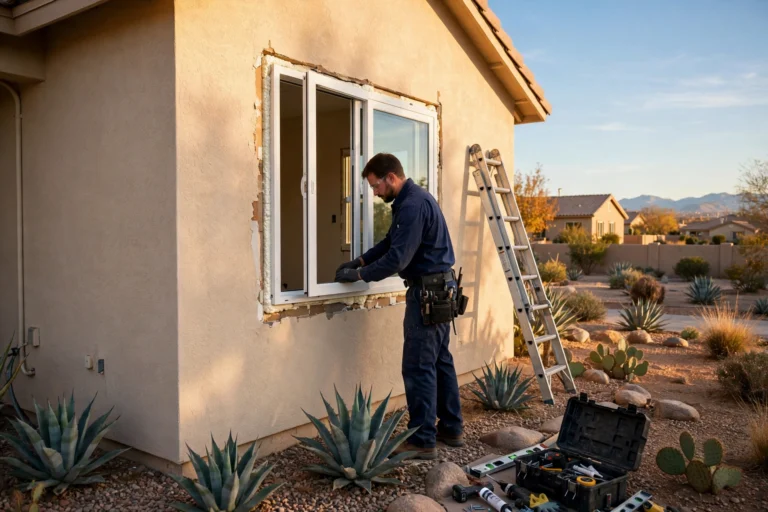
Full replacement. When the frames are old, the seals are shot, or the glass is single-pane, nothing short of new windows solves the problem properly. This is also the point where older windows tend to fail on every front at once — noise, draughts, heat gain — so one upgrade fixes all three. A window replacement with laminated, properly sealed units is the permanent answer, and it raises the home’s value in a way curtains never will.
Choosing Soundproof Windows for the Desert
El Paso adds two wrinkles worth knowing. First, laminated glass also blocks most UV, which protects furniture and flooring from the brutal desert sun — a free bonus on top of the quiet. Second, the same multi-pane, low-E units that cut noise also cut heat gain, so a soundproof upgrade quietly lowers summer cooling bills too. Ask your installer for a unit that does both jobs, and you are not paying for quiet and paying again for efficiency.
One caution: do not chase the thickest glass on the shelf and call it done. Without airtight installation the most expensive acoustic unit in the world still leaks sound around its edges. The installer’s sealing work — foam and caulk between frame and wall, level and square fitting — is what makes the rating on the label show up in your bedroom. Get the installation right and even mid-range acoustic units outperform premium glass that was slapped in crooked.
FAQs
How much do soundproof windows reduce noise?
A well-built laminated unit typically cuts perceived noise by half to three-quarters compared with old single-pane windows. Expect traffic to fade to background murmur, not total silence — and rooms facing the street to improve the most.
Is triple glazing better than laminated double glazing for noise?
Not automatically. A laminated double-glazed unit usually outperforms a standard triple-glazed one for sound, because the plastic interlayer absorbs vibration that extra air gaps alone cannot. Triple glazing wins on insulation; lamination wins on noise.
Can I soundproof just the bedrooms?
Absolutely — most homeowners start with the rooms where quiet matters most. Bedrooms facing the road or the flight path are the classic first project, and you can phase the rest of the house later.
Will new windows also help with dust and draughts?
Yes. The same airtight seals that block sound block the fine desert dust and the draughts that sneak in on windy nights — see our guide on energy-efficient windows for how sealing affects comfort and bills year-round.
If street noise, trains, or the base are stealing your sleep, better windows are the fix that lasts. Call (915) 288-9621 for a free quote on quieter windows — ask about laminated, high-STC units and full home installation for the whole-house difference. See our services for the full range, or talk to the window installation team in El Paso about which rooms to start with.