
What to Do When a Window Breaks at Night in El Paso
What to Do When a Window Breaks at Night in El Paso
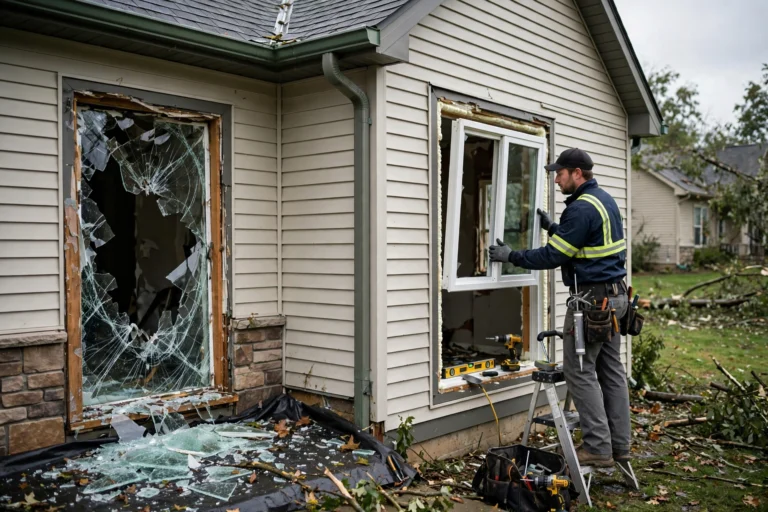
A window rarely breaks at a convenient hour. In El Paso it is usually a storm gust, a stray ball, a rock thrown up from the road, or, worst of all, an attempted break-in — and it always seems to happen after dark, when the house is quiet and the hardware shops are shut. The good news is that you do not need to fix it properly at midnight. You need to make the house safe, keep the weather and insects out, and set yourself up for a clean repair in the morning. Here is exactly how to do that, step by step.
El Paso adds its own twist to a broken window. Even on a mild night, desert wind drives dust through an open frame, and a gap that looks small at 11 pm can let in a surprising amount of grit by sunrise. With scattered thunderstorms forecast for Thursday afternoon and evening, a temporary cover that is only taped at the edges may not survive the night. Board it properly, or cover it properly, and sleep behind a locked door.
1. Stay safe first — before you touch anything
Stop and look before you move. If the break looks like a break-in, or if anyone in the house feels unsafe, do not go outside to investigate on your own. Move everyone away from the broken window, lock the interior doors between you and that room if you can, and call the police on the non-emergency line — or 911 if someone may still be nearby. Take photographs of the damage before you clean anything up; your insurer will want them, and so will the police report if one is needed.
Keep children and pets out of the room entirely until the glass is cleared. Broken glass travels further than you expect: shards bounce off hard floors, slide under furniture, and hide in rugs and curtains. Put on closed shoes before you walk anywhere near the window, and keep a torch handy rather than relying on the room light, which can throw confusing shadows across the glass.
2. Secure the opening for the night
Your goal tonight is a cover that keeps people, weather, and insects out — not a repair. What you use depends on how bad the damage is:
- Cracked but still in the frame: tape the crack on both sides with clear packing tape, in a cross pattern over the impact point and along each crack line. This holds the pane together and stops it shedding shards overnight. Do not lean on it or try to push it back into shape.
- A hole, but most of the pane is intact: tape a sheet of heavy plastic or a bin bag over the hole on the inside of the window, sealing all four edges with duct tape. If you have cardboard, tape that over the plastic for extra strength.
- The pane is gone or the frame is damaged: board it. A piece of plywood cut slightly larger than the opening, screwed into the frame (not just the plaster), is the only cover you should trust overnight. If you have no plywood, a thick moving blanket or rug nailed firmly around the frame is better than a loose sheet flapping in the wind — but treat it as a one-night measure only.
Work from the inside where possible, and wear thick gloves throughout. If glass is hanging in the frame, knock loose pieces outwards, away from you, into the garden — never inwards onto the floor where bare feet will find them later. Once the opening is covered, lock the window and any nearby door, and check the cover from outside if it is safe to do so.

3. Clean up the glass safely
Do the big clean-up now and the fine clean-up in daylight. Sweep up the large shards with a broom and dustpan, working slowly from the edges of the spread towards the centre, and drop them into a rigid container — a cardboard box lined with newspaper, or a bucket — never a thin plastic bag that shards can slice through. Label it if children are in the house.
Then vacuum the area with a hose attachment, including the window sill, the track, and a metre or so beyond where you think the glass reached. Finish with a damp cloth wiped across hard floors to catch the tiny splinters a vacuum misses. In the morning, check again in daylight: glass glints in sunlight that lamplight hides, especially on tiled floors and in rug pile. This is the step most people rush, and it is the one that causes cuts days later.

4. What not to do at night
A broken window at midnight invites quick fixes that cause bigger problems. Do not try to remove the whole sash or fit a replacement pane in the dark — a mis-measured pane, a damaged frame, or a sash dropped from a ladder is a far worse outcome than one night behind plywood. Do not use cling film or a shower curtain as your only cover; both tear in El Paso wind and give no security at all. Do not leave the room unlocked “because nobody will notice” — an open, dark window is exactly what opportunists notice.
And do not ignore a crack that looks minor. A cracked pane is structurally weakened, and the next gust, the next door slammed hard, or the next temperature swing can turn it into a hole. Tape it tonight and book the repair tomorrow, even if it looks stable.
5. In the morning: repair or replacement?
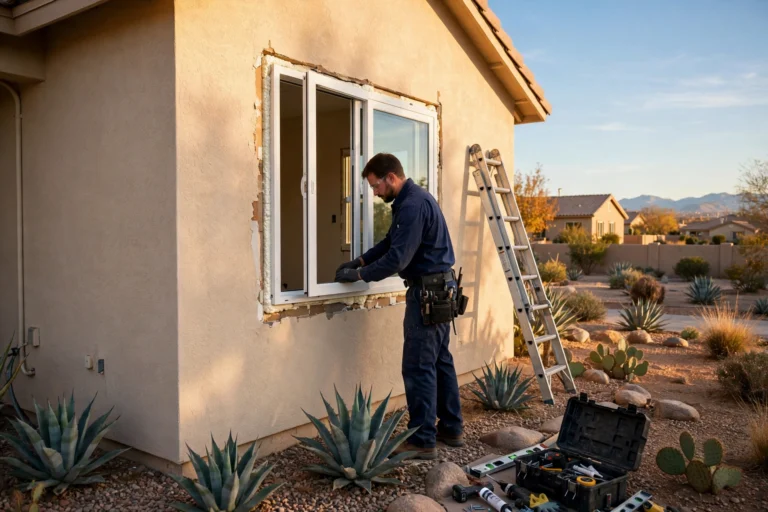
Once it is light, the decision is usually straightforward. A single cracked pane in an otherwise sound, modern frame can often be reglazed — the glass unit alone is replaced. But if the frame is bent, the seal has already failed (look for fogging between the panes), the window is single-pane and draughty, or the same window has broken before, a full replacement is usually the better spend. That is also the moment to upgrade: a modern double-pane unit keeps out far more desert heat and dust than an old single pane, and it is noticeably quieter on a busy street.
If you are weighing the wider question, our guide to window replacement vs repair walks through the same decision in detail. And if several windows in the house are the same age and condition, ask about window replacement options for the whole house rather than replacing one at a time — matching units look better, perform better, and usually cost less per window than separate call-outs.
Before anyone visits, measure the opening (width and height, in three places each), note the frame material and colour, and photograph the damage, the frame, and any stickers or labels on the glass edge. Those details let a company quote accurately and bring the right unit first time, which matters when you are already living behind a boarded window.

6. Insurance, landlords, and the paperwork
If the break was caused by a storm, vandalism, or a break-in, it may be covered by your homeowner policy — but insurers want a prompt report, photographs taken before clean-up, and a police report number where a crime is involved. Keep receipts for any board or plastic you buy overnight; those emergency costs are often claimable even if the glass itself falls under your excess. Do not throw the broken frame or sash away until the claim is settled.
Tenants should tell the landlord or property manager the same night, in writing, with photographs — a broken window is a security issue, and it is the owner’s responsibility to make the property secure. Landlords, meanwhile, should know that a fast, professional replacement protects the property far better than a tenant’s improvised board left in place for weeks.
7. How to stop it happening again
Not every break is preventable, but several are. Tempered glass, which crumbles into small blunt pieces rather than sharp shards, is worth specifying for ground-floor windows and any window near a play area. Security film applied to the inside of the glass holds a broken pane together and slows an intruder down. And for El Paso homes, well-fitted modern frames with proper seals do double duty: they resist wind-blown debris better and they keep the dust out on the hundreds of clear, windy days when nothing is broken at all.
If you have just been through a night-time break, that is the right time to look at the rest of the house with fresh eyes. Windows that rattle in the frame, stick when you try to lock them, or show cracked putty are telling you they are next. A full-home window installation survey will show which ones genuinely need attention and which can safely wait — and our El Paso window team can talk you through the options without any pressure to replace windows that are still sound.
Frequently asked questions
Should I call someone in the middle of the night? If the house is insecure, someone may still be nearby, or the damage is from a break-in, call the police first. A window company can board up and measure in the morning; very few night-time call-outs can fit a proper replacement unit at 2 am anyway.
Is it safe to sleep in the house with a boarded window? Yes, provided the board is screwed into the frame, the room door locks, and you have checked for glass in bedding, rugs, and children’s rooms. If the board feels loose or the frame itself is damaged, sleep in another room.
Can I just tape a cracked window and leave it? Tape is a holding measure for days, not months. A taped crack weakens further with heat and vibration, and it offers no security. Book the repair within a few days.
Will my insurance cover a broken window? Often, yes, for storm, vandalism, and break-in damage, subject to your excess. Report promptly, keep photographs and receipts, and do not dispose of the damaged parts until the claim is closed.
How long does a replacement take once ordered? Standard sizes are usually fitted within a few days of measurement; custom sizes take longer. A boarded window is secure in the meantime, so there is no need to rush into the wrong unit.
If a window has broken at your El Paso home, secure it tonight using the steps above, then call (915) 288-9621 in the morning. We will measure up, explain your repair and window replacement options honestly, and get your home properly sealed and secure again — usually far faster than you expect.