Sliding Windows for El Paso Homes — a Practical Guide
Sliding Windows for El Paso Homes — a Practical Guide
Walk through almost any El Paso home — a stucco house in the Upper Valley, a brick ranch on the Eastside, a newer build out by Zaragoza Road — and you will find sliding windows. They are the local standard for a simple reason: they suit wide wall openings, they open without swinging into a patio or walkway, and they are easy to use every day. Yet not all sliding windows are equal, and in desert heat, dust, and strong sun, the details — glass, frame, seals, and tracks — decide whether a slider stays smooth and efficient for decades or starts sticking, rattling, and leaking air within a few years. This practical guide covers how sliding windows work, where they shine in an El Paso home, what to look for when buying, and when a sticking slider is worth repairing and when it is time to replace it.
1. What Is a Sliding Window, and How Does It Work?
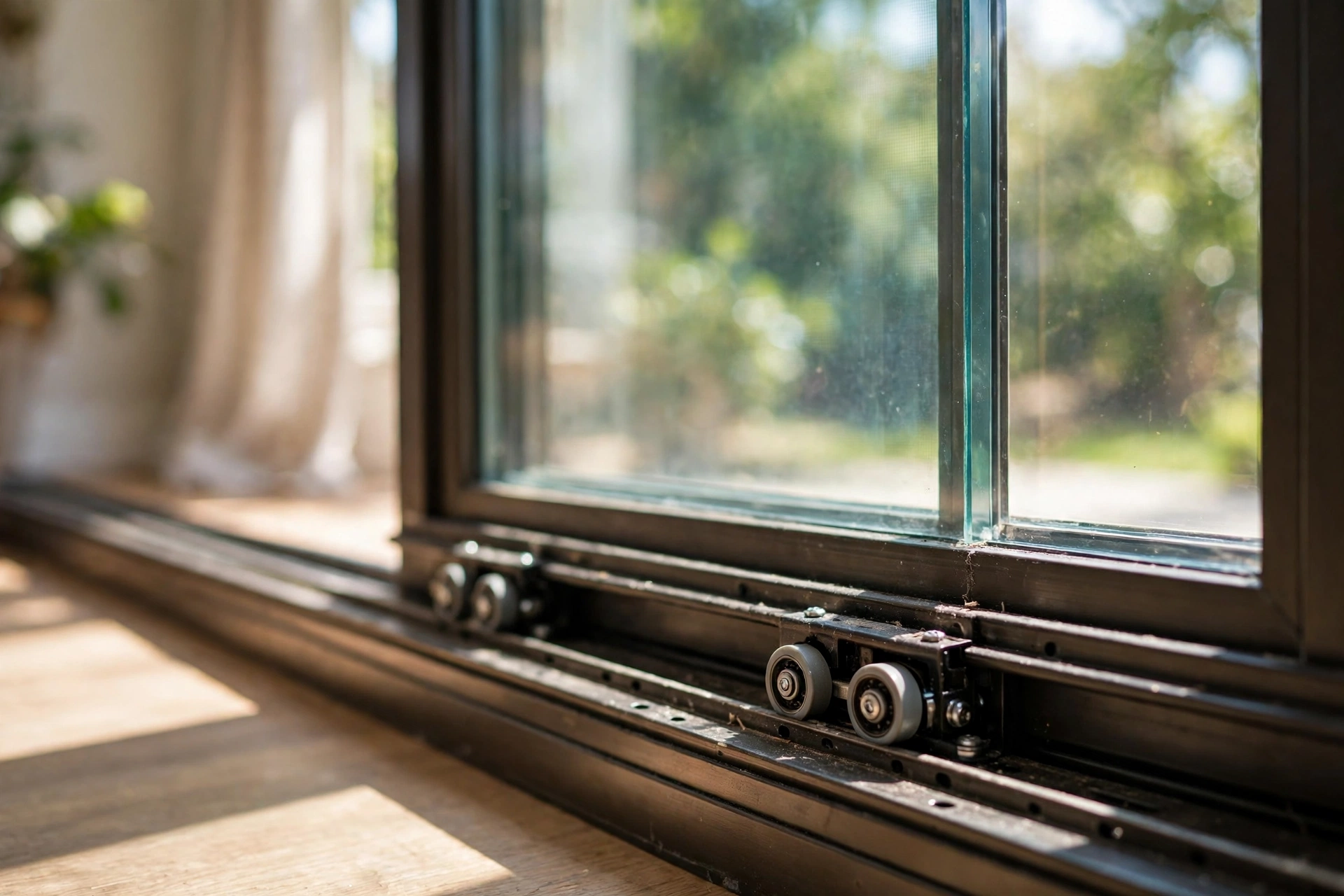
A sliding window, also called a gliding window, opens horizontally along a track instead of lifting vertically or swinging outward. Most El Paso sliders have two sashes in one frame: one fixed panel and one that glides sideways, although three-panel versions exist, with a fixed centre panel and a sliding panel on each side, for very wide openings. Because nothing swings in or out, sliders work where space is tight — over a kitchen sink, beside a patio, along a walkway, or in a room where furniture sits close to the wall. They are also one of the easiest window types to operate: a single sideways push opens them, which is why they are popular in homes with older residents or anyone who struggles with a stiff sash. The trade-off is that the sliding mechanism itself — the track, rollers, and weatherstripping — needs to be well made and well maintained, because it carries the full weight of the sash every time the window moves.
2. Where Sliding Windows Suit El Paso Homes Best
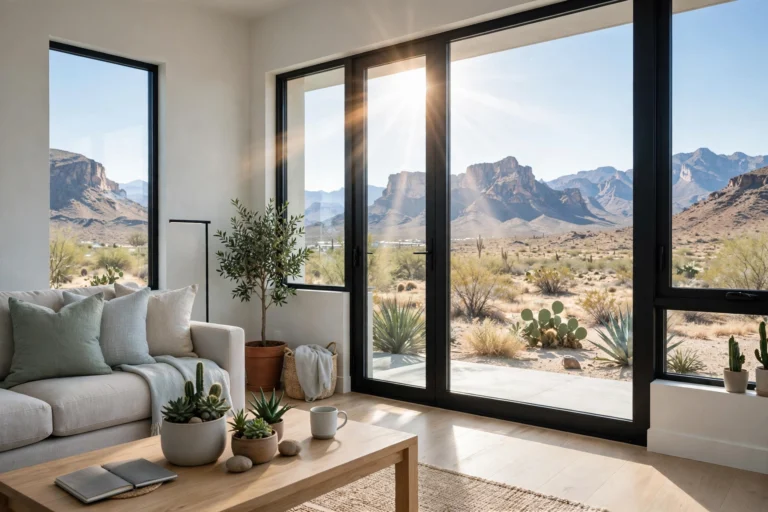
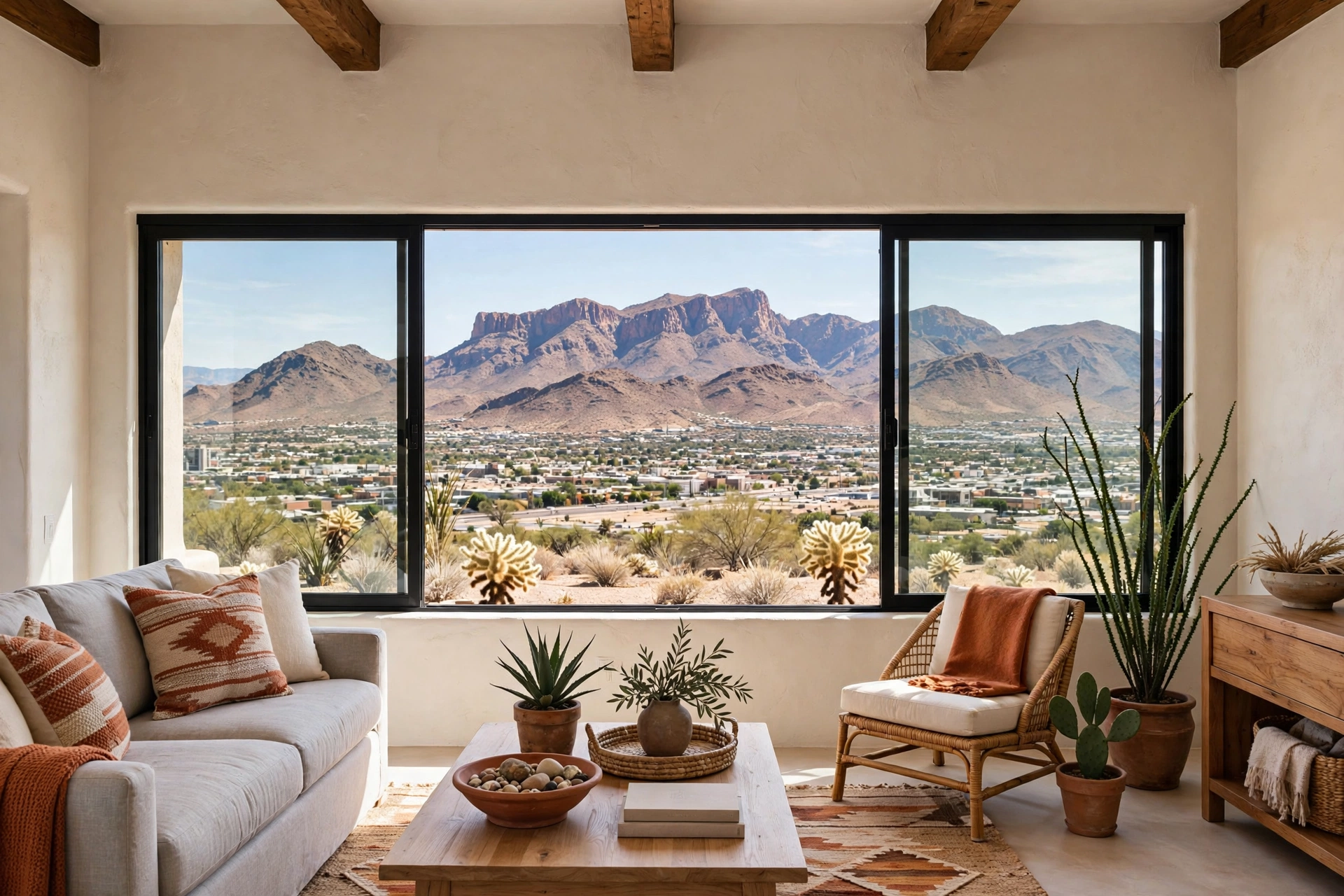
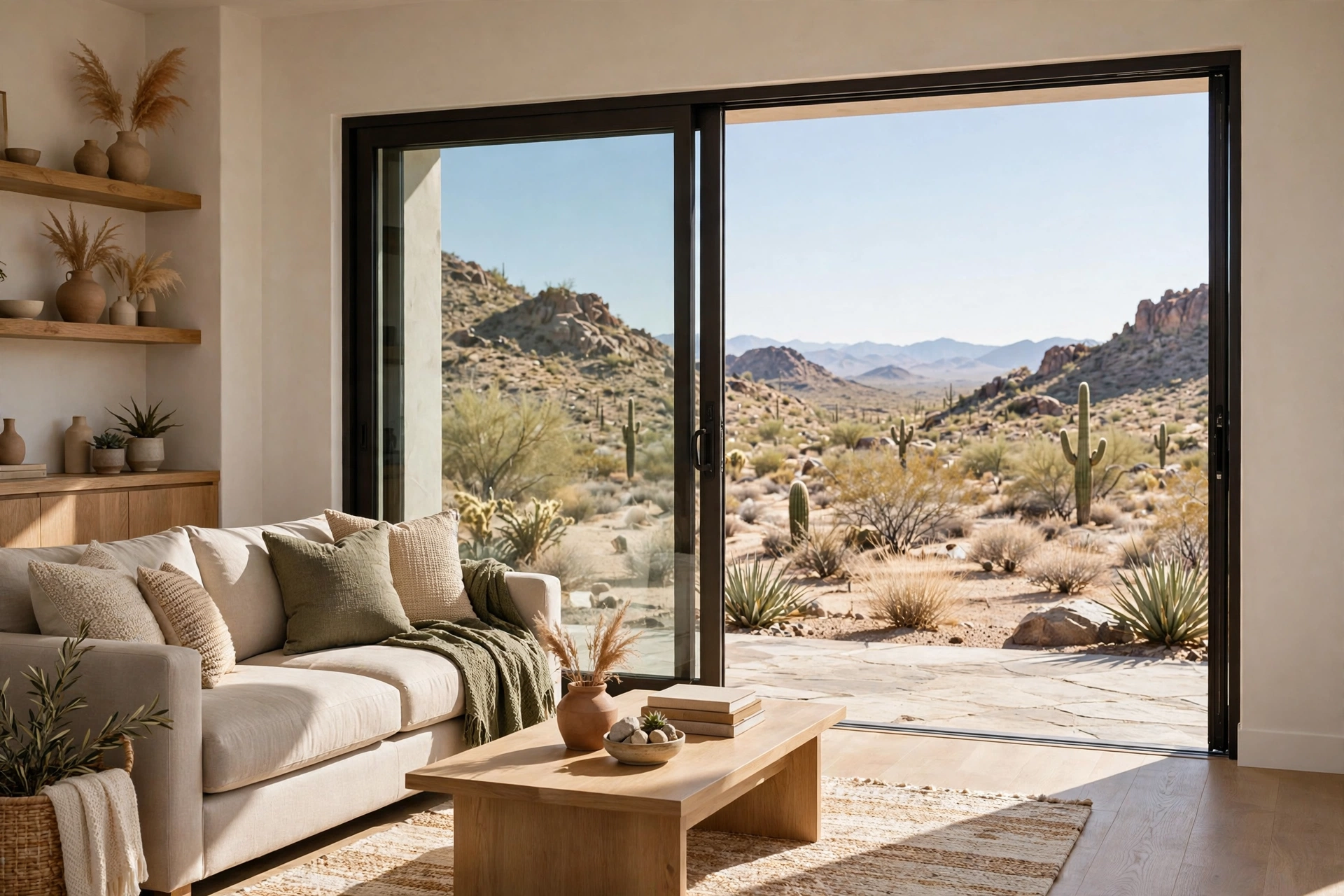
Sliders suit the way El Paso homes are built and lived in. Wide, horizontal openings are common in living rooms and main bedrooms, and a slider fills that shape naturally, giving a broad, uninterrupted view of the Franklin Mountains or a desert sunset. Over a kitchen sink, where reaching up to lift a sash is awkward, a sideways glide is far more practical. Beside a patio or pool, a slider opens without blocking the walkway outside, and in a ground-floor bedroom it gives a simple, reliable escape route. They also pair well with the rest of the house: a slider in the living room can match the style of the picture windows beside it, keeping the whole wall looking coherent. Where a slider is less ideal is a narrow, tall opening — that shape suits a hung window better, as our comparison of single-hung vs double-hung windows explains — and in a room where maximum ventilation matters, because only half of a two-panel slider opens at a time, while a casement or double-hung can open more of its area.
3. Frame Materials and Configurations Worth Comparing
Most sliding windows in El Paso come in vinyl, aluminium, or fibreglass frames, and the choice matters in desert conditions. Vinyl is the most common: it resists warping in heat, needs almost no maintenance, insulates well, and is usually the most affordable option. Aluminium is slim and strong, which suits very large sliders, but bare aluminium conducts heat, so look for a thermally broken frame if you choose it. Fibreglass is the premium option — extremely stable in heat, strong enough for large panels, and paintable — at a higher price. Configuration matters too: a two-panel slider suits most rooms, while a three-panel slider suits a wide living-room wall but costs more and needs a wider opening. Whatever the material, check that the frame is rated for desert exposure and that the finish will not chalk or fade quickly in strong ultraviolet light. If you are replacing sliders across the whole house, a full-home window installation keeps frames, glass, and finishes consistent from room to room, which matters more than most homeowners expect for both appearance and resale.
4. Heat, Dust, and Energy Performance in the Desert
El Paso’s sun is the hardest test a sliding window faces. A slider with plain single glazing will pour heat into the room all summer, so modern specifications are not optional here. Look for double glazing with a Low-E coating, which reflects a large share of solar heat while letting visible light through, and an argon gas fill between the panes, which slows heat transfer further. For west- and south-facing sliders, ask about the solar heat gain coefficient (SHGC): a lower SHGC means less solar heat entering the room, and it is the single most useful number for a sun-facing window. Dust is the other desert problem, and it attacks sliders at the track. Fine desert dust settles in the track, wears the rollers, and eventually makes the sash stick or rattle in the wind. Good weatherstripping and a track design that can be cleaned easily — a simple brush and vacuum every few months — make a real difference. A well-sealed slider should feel solid when closed, with no draught around the meeting rail where the two sashes overlap, since that joint is the most common air-leak point on a worn slider.
5. What Sliding Windows Cost — and What Drives the Price
There is no single price for a sliding window, and any figure quoted without seeing your opening should be treated with caution. The main cost drivers are size (a three-panel slider costs considerably more than a standard two-panel unit), frame material (vinyl usually the most affordable, fibreglass higher), glass specification (Low-E and argon fills add cost but pay back in comfort and cooling bills), and the condition of the existing opening. Replacing a slider in its current opening is a straightforward job; enlarging the opening, repairing water-damaged framing, or reworking stucco around a new size adds labour and time. Published national guides give broad ranges for standard sliders, but those are national figures, not an El Paso quote — the only firm figure comes from measuring your opening and checking its condition in person. Our window replacement options page explains how project pricing is put together, and a local, in-home quote will confirm the exact cost for your home before any work starts.
6. Sticking, Rattling, and Fogging: Repair or Replace?
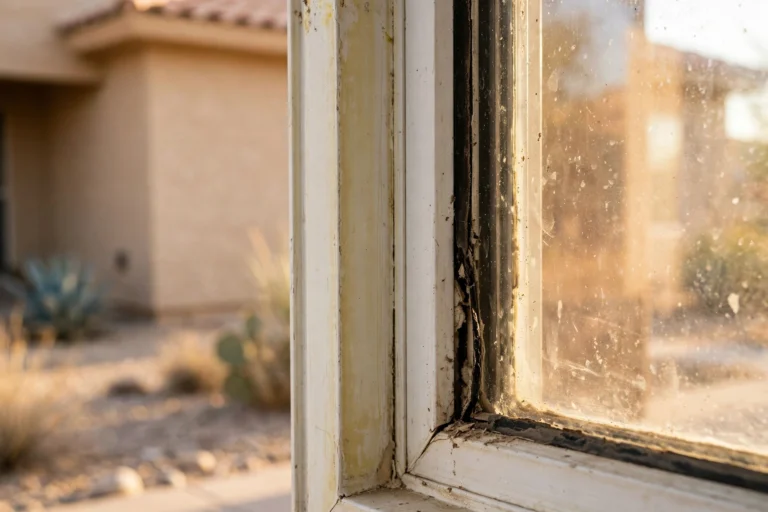
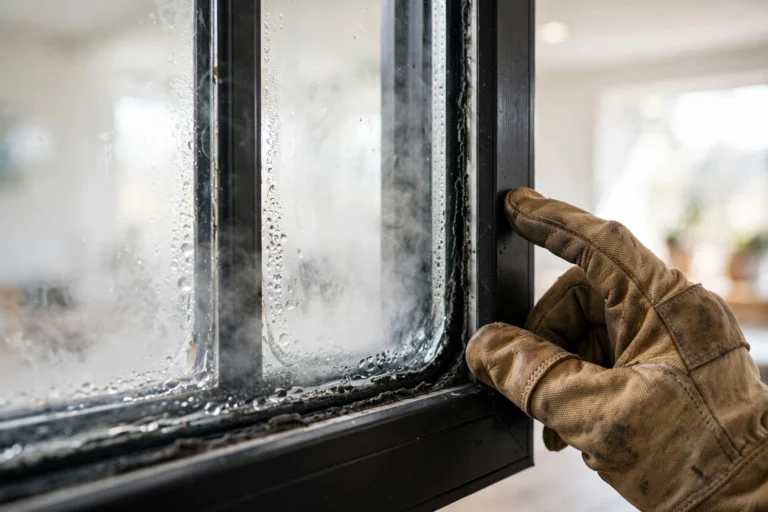
Most slider problems start small and are worth fixing early. A sash that sticks usually needs only a track clean, a roller adjustment, or new rollers — a quick, inexpensive repair. Worn weatherstripping can be replaced, a loose latch can be tightened, and a sash that rattles in the wind often just needs its rollers and seals adjusted. Replacement becomes the smarter choice when the problems stack up: fogging or moisture between the panes means the sealed glass unit has failed and cannot be fixed by cleaning; a warped or corroded frame will keep binding no matter how often the track is cleaned; and a single-glazed slider that overheats the room every summer will keep costing you in cooling bills long after a repair. As a rule of thumb, one fault is a repair, while failed glass plus a worn frame plus poor energy performance is a replacement — and replacing the whole unit lets you upgrade the glass, the seals, and the frame in one job rather than patching each in turn.
7. Choosing and Installing: What to Ask Before You Buy
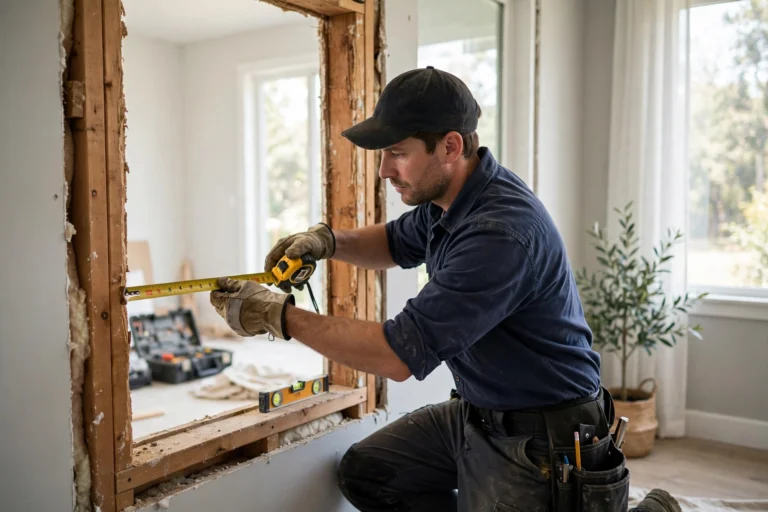
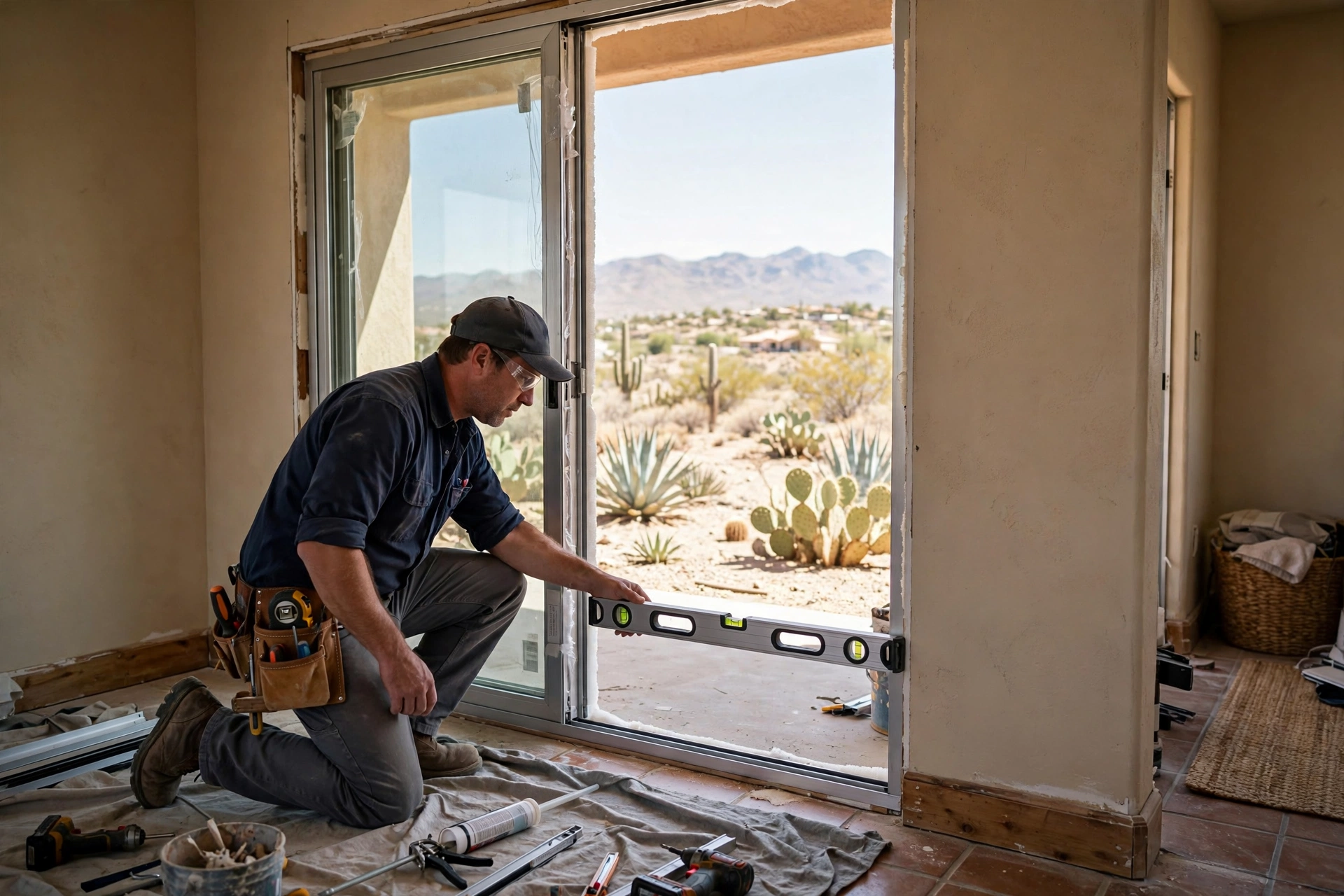
Before you order, ask the questions that reveal quality. What is the SHGC and U-factor of the exact glass package for your orientation? Are the rollers metal or nylon, and can they be adjusted or replaced without removing the whole window? How is the meeting rail sealed, and what weatherstripping is used? Is the frame warranted against warping and fading in desert heat, and for how long? On installation day, expect the crew to remove the old unit, check the opening for damage or rot, set the new slider level and square — a slider that is not square will bind from day one — insulate and seal around the frame, and test the glide several times before finishing the trim. Ask them to show you how to clean the track and remove the sash for cleaning, since that small lesson is what keeps a slider gliding smoothly for years. If the whole house needs attention, talk to the local window team about phasing the work so the worst sliders go first and the rest follow.
Frequently Asked Questions
Are sliding windows energy efficient? A modern slider with Low-E, argon-filled double glazing and good weatherstripping can be very efficient. An old single-glazed slider with worn seals is not — the glass and seals, not the sliding style itself, decide efficiency.
Can only half of a sliding window open? On a standard two-panel slider, yes — one panel is fixed and one glides, so about half the window area opens. Three-panel sliders open from either side but still leave the centre panel fixed.
Why does my sliding window stick? Usually dust and grit in the track, worn rollers, or a sash that has dropped out of square. Cleaning the track and adjusting or replacing the rollers fixes most cases.
Are sliding windows secure? Yes, when fitted with a proper latch and, ideally, a secondary lock or security bar. Check the latch quality before you buy — cheap latches are the weak point on budget sliders.
Can a sliding window be replaced without changing the opening size? Yes — a like-for-like replacement in the existing opening is the simplest and most affordable route, and it is what most El Paso slider replacements involve.
Thinking about new sliding windows for your El Paso home? Call (915) 288-9621 for a local, in-home quote — we will measure your openings, talk through glass and frame options for your orientation, and give you a firm price before any work starts.