Window Repair in El Paso — What Can Be Fixed and What Cannot
Window Repair in El Paso — What Can Be Fixed and What Cannot
El Paso’s cool November nights have a way of exposing window problems that summer hides. A draught you never noticed in July suddenly whistles through the bedroom at 10°C, a lock that worked fine all year stiffens up, and the fog between two panes that you ignored in the heat is suddenly the first thing you see every morning. The good news is that many of these faults are genuine repairs — quick, affordable fixes that leave the window working properly for years. The bad news is that some faults only look repairable, and spending money on them is money thrown away.
Knowing which is which saves you both ways: you do not pay for a new window when a new handle would do, and you do not pay for three repairs on a window that should have been replaced the first time. Here is the honest breakdown, fault by fault, for El Paso homes. If you are still weighing the bigger question first, our replacement vs repair guide will help you settle it.
Broken or Cracked Glass — Usually Repairable
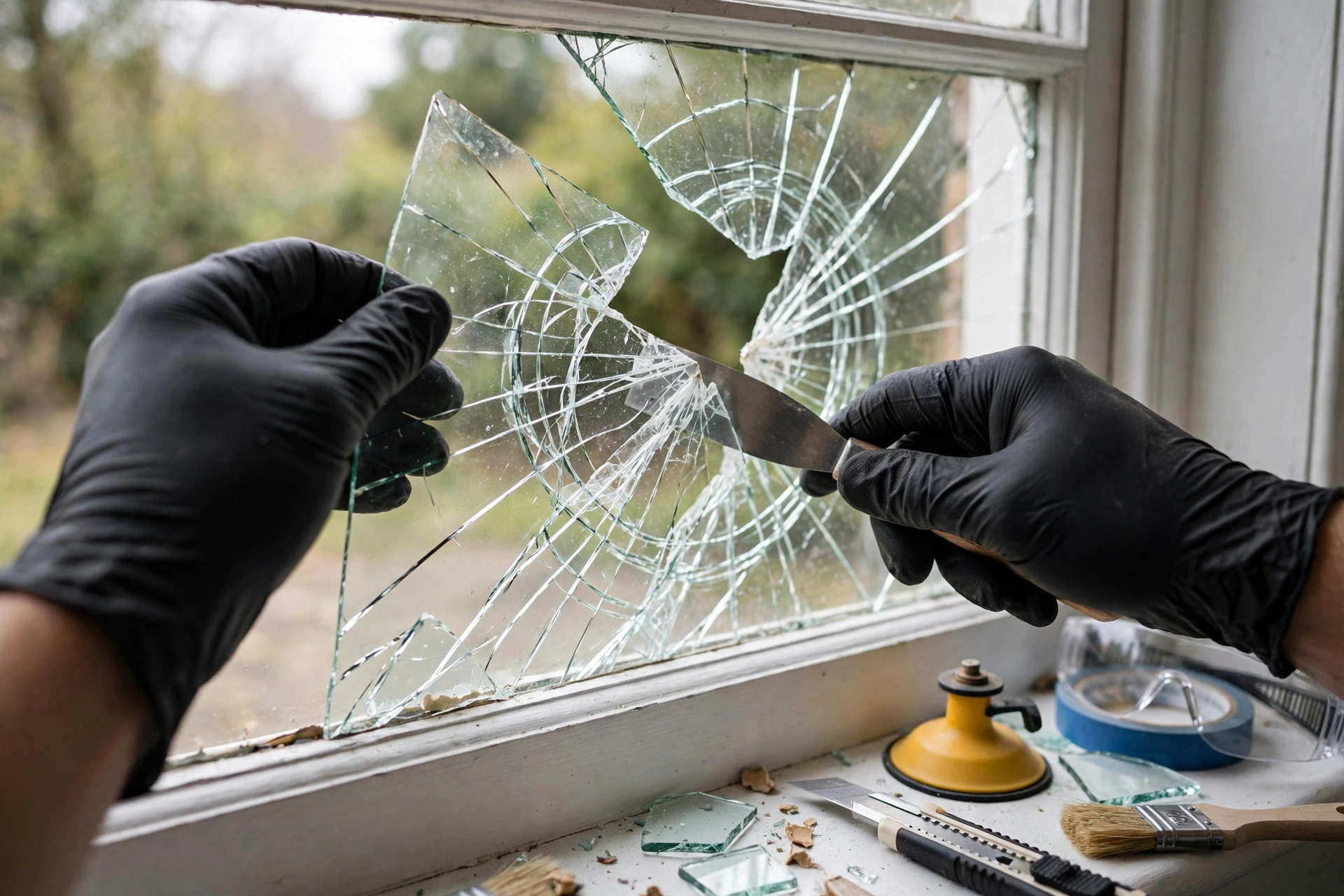
A cracked pane is the most straightforward window repair there is — with one important exception. A single pane of glass in an older window can be removed and re-glazed by a professional in under an hour, and the window is as good as new. The cost is a fraction of a replacement window, and there is no reason to replace the whole unit for a single crack.
The exception is a sealed double-pane unit. The two panes are bonded together at the factory with a gas fill between them, so a crack in one pane means the whole sealed unit has to come out and a new one goes in. That is still a repair, not a full window replacement: the frame, the trim and the opening stay exactly where they are, and only the glass unit is swapped. Our window glass replacement guide explains when a glass-only swap is the right call. A shattered window after a break-in is a different job — board it up, make the home safe, and read our night breakage guide for what to do in the first hour.
Fogged Windows — the Seal Has Failed, and It Cannot Be Un-Failed
Fog or condensation between the two panes of a double-pane window means the seal has failed and the insulating gas has escaped. This is the fault El Paso homeowners ask about most, and it is the one with the least room for argument: no spray, no drill-and-vent trick, and no sealant restores a failed seal. The moisture will keep coming back, and the window will never insulate properly again.
What can be fixed is the glass unit itself. In most cases the frame is perfectly sound, so the sealed unit is measured, ordered, and fitted into the existing frame — a glass replacement, not a window replacement. The only time the frame has to go too is when it is damaged as well, which brings us to the faults below. If more than one window in your home is fogging, treat it as a warning sign: seals tend to fail at a similar age across a house, and the others may follow within a year or two.
Windows That Stick, Drop, or Will Not Stay Open — Hardware, Not the Window
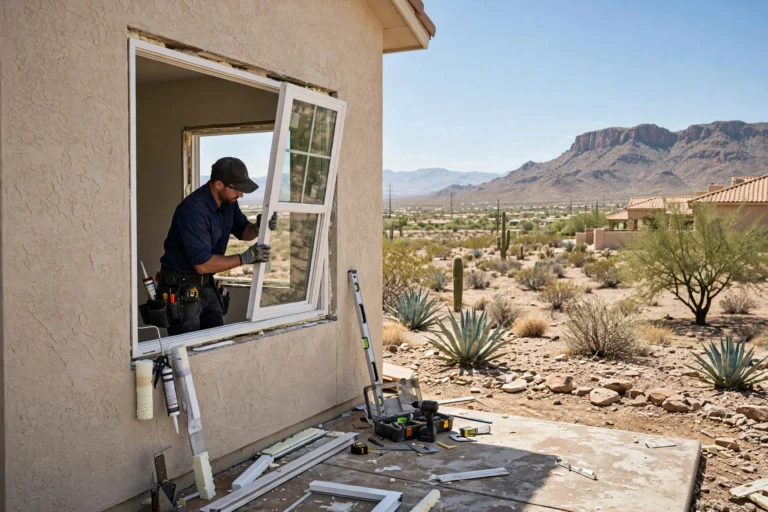
A sash that slams shut, a window that will not open without a fight, or a crank that spins without moving anything is almost always a hardware problem, and hardware is the cheapest thing on a window to fix. Spiral and block-and-tackle balances wear out, hinges corrode in desert dust, rollers flatten, and tracks fill with grit. A professional can replace balances, hinges, rollers and locks, clean and lubricate the tracks, and have the window gliding smoothly again in a single visit.
One caution: if a window sticks because the frame itself has warped or swollen, new hardware will not hold the fix. Vinyl frames that have baked on a west-facing wall for fifteen summers can bow out of square, and no balance or hinge compensates for a frame that no longer sits true. A technician can tell in minutes whether the frame is square — ask them to check before you approve a hardware repair.
Draughts and Leaks Around the Frame — the Best Value Repair of All
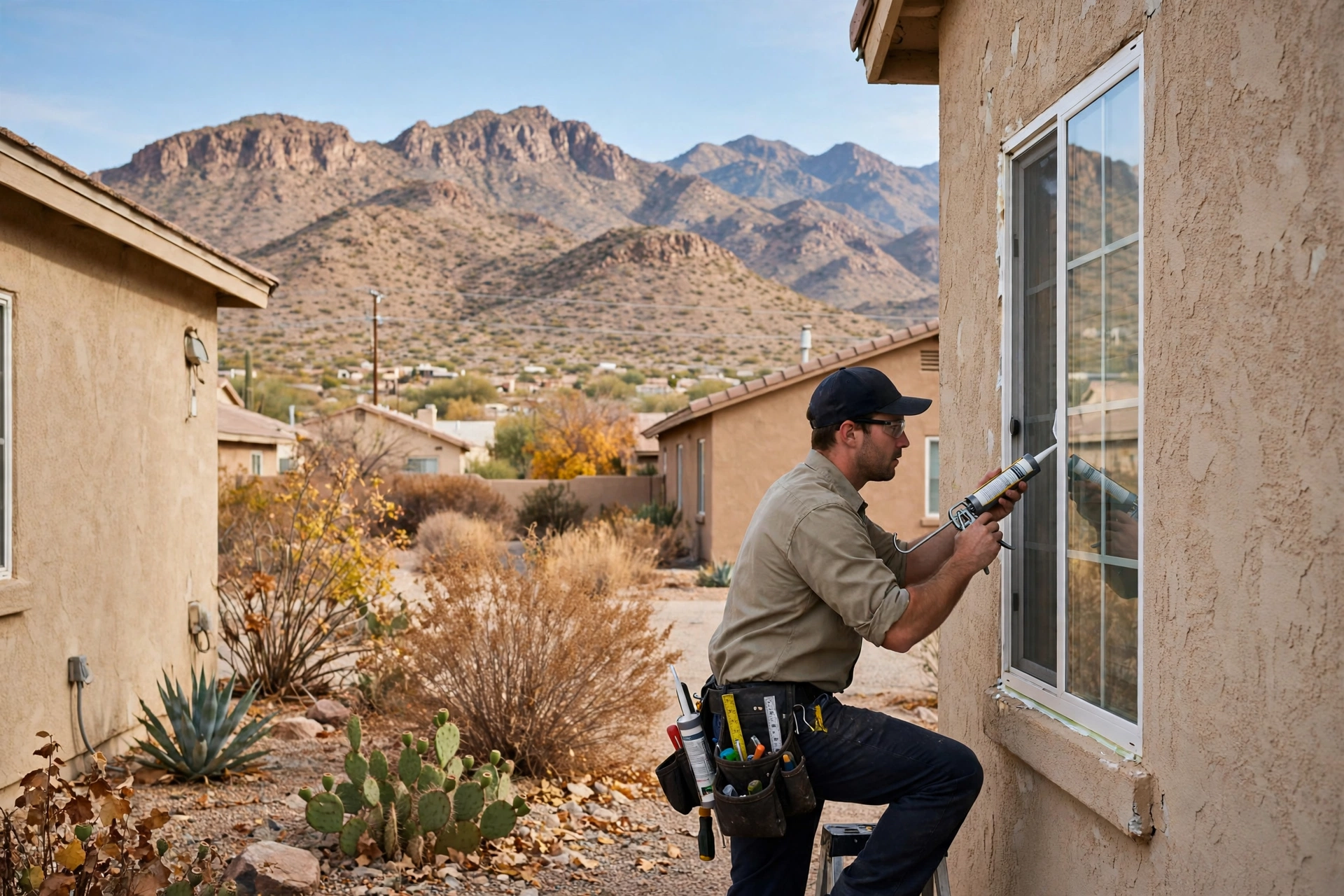
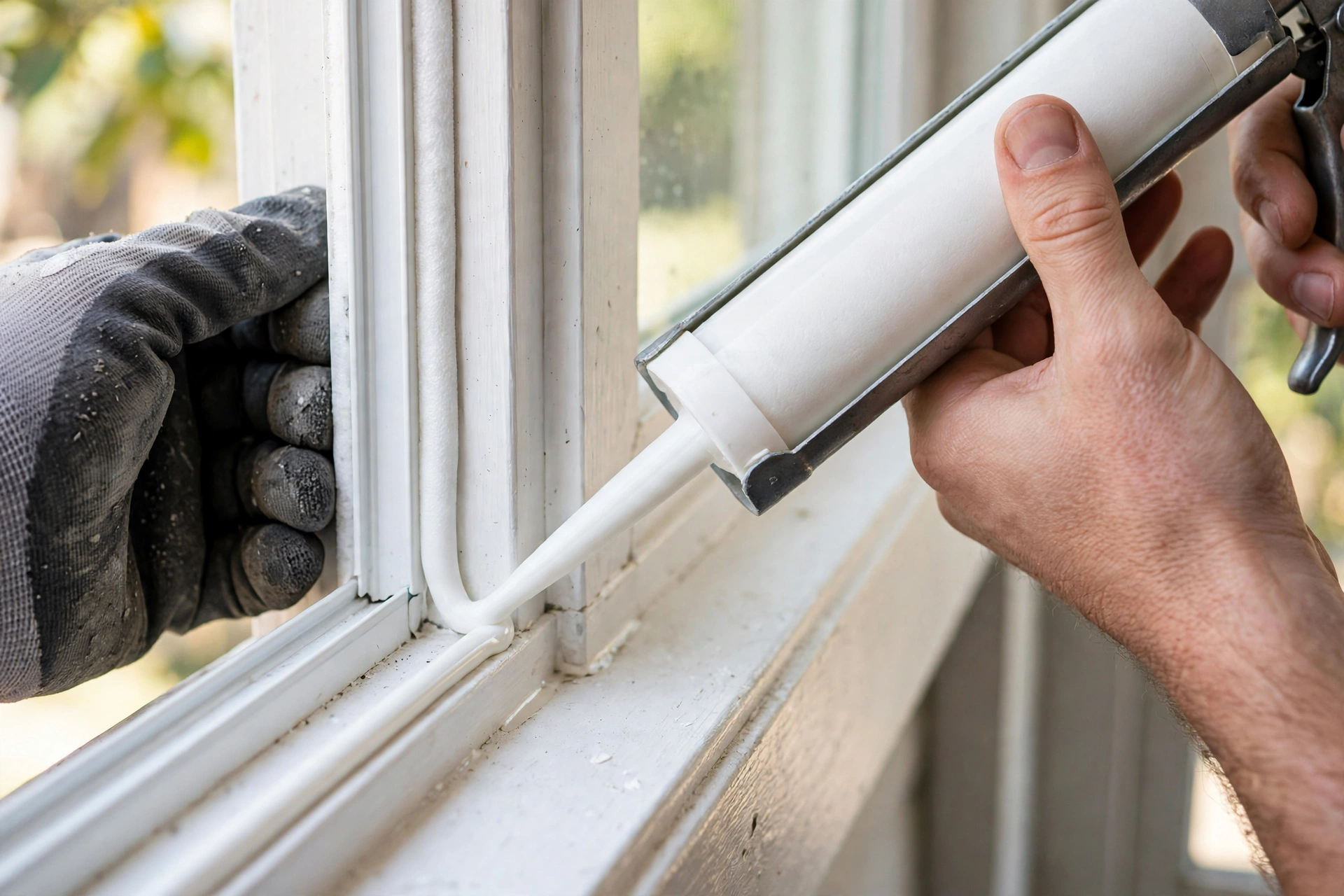
Draughts are the fault most worth fixing, because the repair is cheap and the payoff is immediate: a warmer room on a cold night and a smaller heating bill. In most El Paso homes a draught comes from worn weatherstripping, cracked caulking, or glazing putty that has dried out and shrunk. All three are routine repairs — fresh weatherstripping, a proper bead of exterior caulk, and re-glazing where the putty has failed.
Before you blame the window, check the wall around it. Stucco homes in particular can develop hairline cracks where the frame meets the wall, and water that appears at the sill after a storm may be coming through the wall, not the window. A good repair visit includes a hose test on the outside to find where water actually enters. If the leak is in the wall, sealing the window will not stop it — and knowing that before you pay for window work is worth the visit alone.
Broken Locks, Handles and Cranks — a Quick Swap
Locks, handles, cranks and latches are wear items, and replacing one is usually the simplest job on this list. Most hardware is standardised, so a technician carries the common parts and can fit a new lock or crank on the spot. This is also a security matter, not just a convenience one: a window that cannot be locked is an open invitation, so do not leave a broken lock for the weekend.
The one case where a hardware swap does not work is when the part is obsolete and no longer made — common on windows more than twenty years old. A good technician will tell you honestly if the part is unavailable rather than bodging a modern part into an old fitting. If two or three parts on the same window are obsolete, that is usually the moment to stop repairing it.
Torn Screens — Easy, and Worth Doing Before Spring
A torn screen is a five-minute job for a professional: new mesh, new spline, and the frame is back in place. Rescreening is so inexpensive that it is rarely worth doing yourself unless you enjoy fiddly work. Fix screens now, in the quiet season, rather than in April when every window company in El Paso is booked solid and the first flies of spring are already in the house.
Rotted Wood and Warped Frames — the Line Between Repair and Replacement
Small patches of rot in a wood frame can be cut out and filled with epoxy, then sanded and painted, and the repair can last for years. That is a genuine fix, and it is worth doing on a good-quality wood window. But rot is a progressive problem: if the rot runs deep into the sill or the frame, if it has reached the structural framing behind the window, or if it keeps returning after a repair, patching it is only buying time.
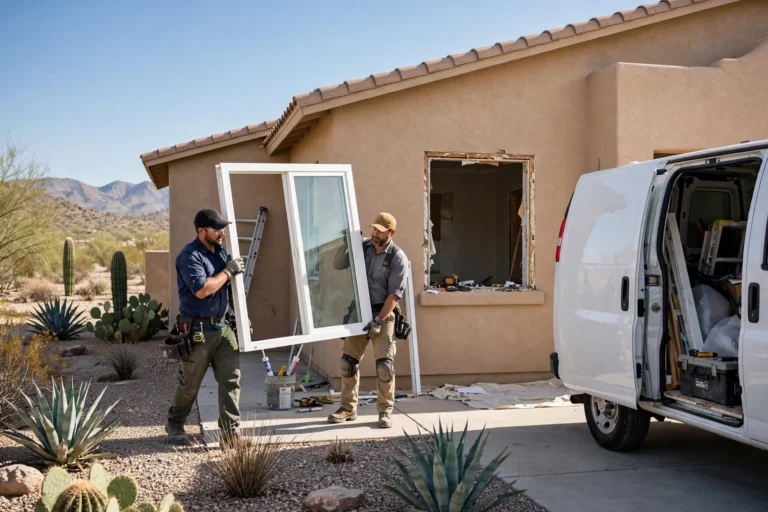
The same line applies to warped frames. A vinyl frame that has bowed in the heat will not straighten, and an aluminium frame that has corroded through cannot be made sound again. Once the frame itself has failed, the window has failed with it — and at that point the honest answer is one of our window replacement options, not another repair.
What Cannot Be Fixed at All
A few faults have no repair, and any company that offers to fix them is selling you a temporary patch. A failed seal cannot be restored. A warped vinyl or aluminium frame cannot be straightened. A window with structural damage behind it — a cracked lintel, a sagging header, a wall that has moved — cannot be made right by working on the window alone. And a single-pane window in a home you plan to keep is not worth repeated repairs: the glass may be fixable, but the window will keep losing heat all winter and gaining it all summer, and the money spent keeping it alive would have been better spent replacing it.
Repair or Replace? A Quick Decision Guide
Use three simple tests. First, the cost test: if the repair costs close to half the price of a new window, replace it — you are paying replacement money for a window that still has its old age and old energy performance. Second, the age test: a window under fifteen years old with a single fault is a repair; a window over twenty years old with two or more faults is a replacement. Third, the energy test: if the window is single-pane, or its seals have failed, it is costing you money every month in heating and cooling, and no repair restores its insulation. Two or more failed tests means replacement; one failed test usually means repair. If you do decide to replace, ask about full-home window installation — replacing the whole house at once is often cheaper per window than replacing them one at a time.
What a Repair Visit Looks Like
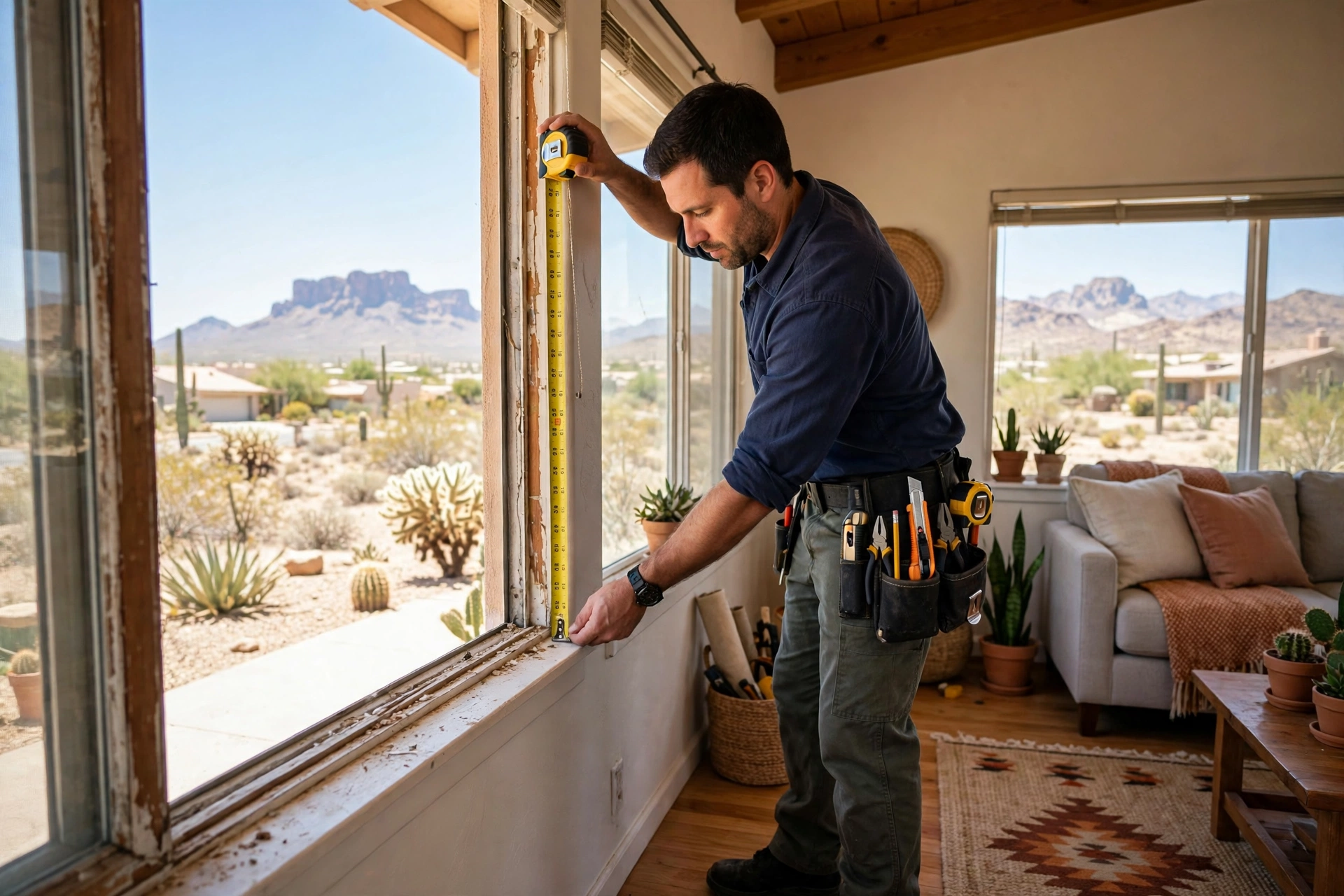
A proper repair visit takes about an hour. The technician inspects every window you have flagged, tests how each one opens, closes and locks, checks the seals and the frame for square, and runs a hand around the frame to feel for draughts. You should get a written quote before any work starts, listing each repair separately, so you can approve the ones that make sense and hold the rest. The work itself is usually done the same day for hardware, weatherstripping, screens and single-pane glass; a sealed glass unit has to be ordered to size, so expect a second visit a week or two later. Before the technician leaves, every repaired window should be opened, closed and locked in front of you.
Frequently Asked Questions
Can a foggy double-pane window be repaired, or does it need replacing?
The sealed glass unit needs replacing — the failed seal itself cannot be repaired. In most cases only the glass unit is replaced and the frame stays, which keeps the job far cheaper than a full window replacement.
Is it worth repairing a 20-year-old window?
Usually not, if it has more than one fault. A single cheap fix, such as a new lock, is fine at any age. But if a twenty-year-old window needs a new glass unit and new hardware, the repair bill approaches the cost of a new window that would also insulate far better.
Can a rotted window frame be repaired?
Small, shallow rot can be cut out and filled with epoxy and will last for years. Deep rot that reaches the sill or the framing behind the window cannot be patched reliably, and the window should be replaced.
How long does a typical window repair take?
Most repairs — hardware, weatherstripping, screens, single-pane glass — are finished in a single visit of an hour or two. A sealed glass unit has to be ordered to size, so that job takes a second visit a week or two later.
Can a cracked window be fixed without replacing the glass?
No. A crack in glass cannot be repaired to its original strength, and a cracked sealed unit has lost its insulation as well. The pane or the sealed unit must be replaced — but the frame usually stays.
Get an Honest Answer Before You Spend Anything
The difference between a repair and a replacement is often a few hundred dollars and twenty years of performance — which is why the assessment matters more than the fix. A good company will tell you when a repair is all you need, even though a replacement would pay them more. That is the standard to hold every company to, including us. If a window in your home is fogging, sticking, draughty or broken, our local window team can visit, inspect it, and give you a straight answer — repair or replace — in writing, with no obligation. Call (915) 288-9621 for a free assessment.